EN
    • Welding robot
      The hollow robot can reach 95% of the speed of Yaskawa robot.Support TIG/MIG/MAG welding process and laser welding processEuropean standard safety dou
    • Handling robot
      Load range from 3KG to 1600KG, protection grade IP67, higher speed, more reliable and richer
    • Scara robot
      Accuracy +-0.01mm, door word (25mm * 300mm * 25mm) beat speed up to 0.48 secondsNo singular points, drag teaching, anti-collision, drag teaching, abso
    • Small 6 axis robot
      Accuracy +-0.02mm, door word (25mm * 300mm * 25mm) beat speed up to 0.48 secondsNo singular points, drag teaching, anti-collision, high-speed emergenc
    • collaborative robot
      SGS CE certification, CR certification and ISO9001 enterprise certificationSupport common processes such as welding, handling, and palletizing.Europea
    • Positioner and linear rail
      Positioners, gun cleaning stations, overhead rails, ground rails and other equipment
    • More equipment
      Positioner and rotary table ; Linear rail , Welding platform, Welding torch , Gripper, Torch cleaning station, Water tank
    The hollow robot can reach 95% of the speed of Yaskawa robot.Support TIG/MIG/MAG welding process and laser welding processEuropean standard safety dou
  1. Industry overviewIndustry overview

    The robot load ranges from 6KG to 3200KG, with high speed and high precision; because of its innovative, efficient and competitive solutions; it is recognized by users around the world and has accumulated a large number of application cases
  1. Application overviewApplication overview

    Through fine classification and higher core computing, the maximum operating speed has broken through to 700 /s; the device speed has stable, fast and efficient performance regardless of long-distance or short-distance, and has IP65 protection level
  1. Service and SupportApplication overview

    LIENGT robot has been focusing on manufacturing, research and development, and sales of industrial robots for ten years, creating value for you with professional
  1. About UsApplication overview

    LIGENT robot is a provider of industrial robots, core components and industrial automation solutions. The companys industrial robots have been successfully appli
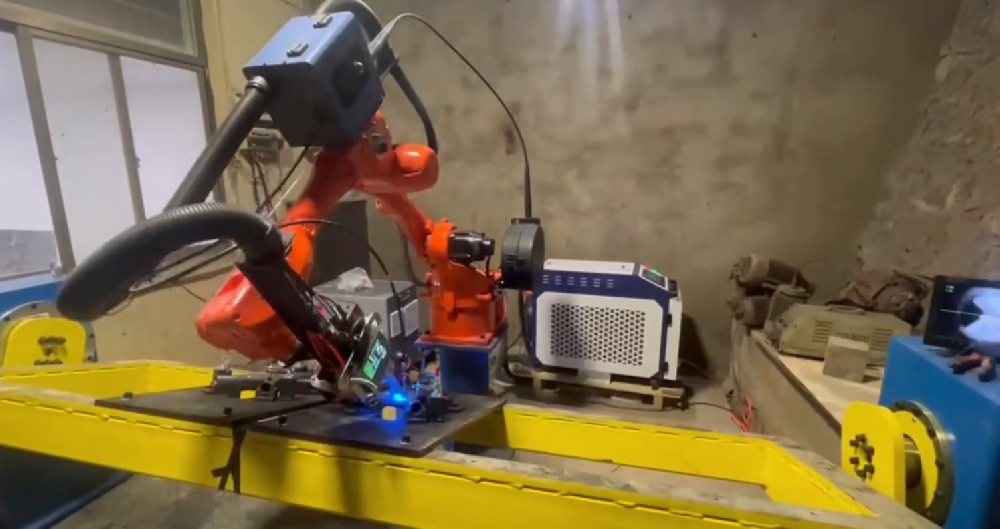
Small Welding Robot for Low Volume Production: Start Small, Automate Smarter
HOME
Blog
08-27 2026

flexible automation

Flexible Robotic Welding for Small-Batch Manufacturing

Manufacturing automation does not always have to begin with a large production line. For many companies producing customized components, small batches, or multiple product models, a compact robotic welding system can provide a more practical starting point.

A small welding robot for low volume production can automate repetitive welding operations while preserving the flexibility required for changing production schedules and different workpieces.

For manufacturers that are not ready to invest in a large-scale automated line, a small welding robot can offer a gradual path toward automation. By automating the right welding processes first, companies can improve productivity and quality while keeping the production system relatively simple.

LIGENT Robot provides industrial robot and welding automation solutions for manufacturers looking to introduce flexible robotic technology into their production processes.

Why Low Volume Production Requires a Different Approach

High-volume manufacturing often uses dedicated automation equipment designed to produce the same product continuously. However, low-volume manufacturers typically face a different production environment.

They may need to:

  • Produce multiple product models

  • Handle customized orders

  • Change production schedules frequently

  • Manufacture small batches

  • Work within limited factory space

  • Maintain flexibility for new products

For these manufacturers, a highly specialized production line may not provide the best return on investment.

A small welding robot can provide a more adaptable alternative.

Instead of automating the entire production process, manufacturers can focus on repetitive welding operations where robotic automation can deliver the greatest benefit.

What Makes a Small Welding Robot Practical?

Compact Installation

A smaller robot can fit into a dedicated welding workstation without requiring a large production area.

This is particularly useful for factories that already have established production layouts and cannot easily allocate significant space for a new automated line.

Flexible Programming

Low-volume production often involves different workpieces.

A programmable robot can store different welding programs for different products, allowing manufacturers to switch between suitable production tasks more efficiently.

Easier Automation Integration

A small robotic welding system can be integrated with equipment such as:

  • Welding power sources

  • Positioners

  • Welding torches

  • Safety systems

  • Linear rails

The final configuration can be selected according to the workpiece and welding requirements.

Improve Welding Quality with Robotic Repeatability

One of the main reasons manufacturers adopt robotic welding is the ability to achieve repeatable welding performance.

Manual welding results can vary because of operator experience, fatigue, and working conditions.

A programmed robot can repeatedly follow a defined welding path and maintain consistent movement.

This can help manufacturers improve:

  • Weld consistency

  • Welding speed

  • Torch positioning

  • Production repeatability

  • Overall product quality

For low-volume manufacturers, this can be particularly valuable when producing customized or higher-value components where rework can significantly increase production costs.

Reduce Repetitive Work for Welders

A small welding robot does not necessarily mean replacing skilled welders.

Instead, robotic automation can take over repetitive welding operations while experienced employees focus on tasks that require human judgment and expertise.

For example, operators can be responsible for:

  • Loading and unloading workpieces

  • Monitoring the robot

  • Inspecting welds

  • Adjusting production programs

  • Managing different product models

This approach allows manufacturers to use their skilled workforce more efficiently.

Small Welding Robot Applications

A compact welding robot can be suitable for many applications where production involves repetitive welding and compatible workpiece dimensions.

Metal Fabrication

Small and medium-sized metal fabrication companies can automate welding for frames, brackets, supports, and other fabricated components.

Machinery Components

Manufacturers producing machinery parts can use robotic welding to achieve repeatable results across different production batches.

Automotive Parts

Suppliers producing smaller automotive components can introduce robotic welding to improve consistency and production efficiency.

Customized Metal Products

Companies producing customized products can benefit from programmable robotic welding while maintaining flexibility between different product models.

Small Welding Robot vs. Traditional Manual Welding

Both manual and robotic welding have their place in modern manufacturing.

Manual welding provides excellent flexibility for highly customized, one-off products. However, repetitive operations can become time-consuming and labor-intensive.

A small welding robot becomes more attractive when the same or similar welding operations are repeated frequently.

FactorManual WeldingSmall Welding Robot
Repetitive productionLabor intensiveHighly suitable
Welding consistencyDepends on operatorHighly repeatable
Production flexibilityHighHigh with proper programming
Skilled labor requirementHighLower for repetitive tasks
Factory spaceFlexibleCompact workstation possible
Production volumeSuitable for very low volumeSuitable when tasks are repetitive

The best solution depends on the product, production volume, welding process, and required flexibility.

How to Select a Small Welding Robot

Before choosing a robotic welding system, manufacturers should evaluate several technical factors.

Robot Payload

The payload should be sufficient for the welding torch, cables, and any workpiece-handling requirements.

Working Range

The robot should be able to reach all required welding positions without excessive repositioning.

Welding Process

The required welding process should be considered when designing the system, including MIG/MAG, TIG, ARC, or laser welding.

Workpiece Positioning

A positioner can rotate or reposition a workpiece, allowing the robot to access different welding areas more effectively.

Production Requirements

The robot configuration should match the actual production volume rather than being selected solely according to maximum specifications.

LIGENT Robot: Supporting Flexible Welding Automation

LIGENT Robot provides industrial robots and automation solutions for manufacturers across different industries.

Its product portfolio includes welding robots, small six-axis industrial robots, collaborative robots, and supporting automation equipment. LIGENT welding solutions can be configured for different welding applications, including MIG/MAG, TIG, ARC, and laser welding.

For manufacturers considering a small welding robot for low volume production, the appropriate system can be selected according to workpiece size, payload, working range, welding process, production volume, and available factory space.

This allows companies to build a robotic welding workstation that is focused on their actual production requirements rather than investing in unnecessary automation.

Start Small and Expand Your Automation

For low-volume manufacturers, automation does not have to happen all at once.

A practical strategy is to begin with one repetitive welding process that consumes significant labor time. Once the system is operating successfully, manufacturers can evaluate additional processes and gradually expand automation.

This approach can make robotic welding easier to implement while allowing companies to gain experience with robot programming, production management, and automated quality control.

A small welding robot can therefore be more than a compact piece of equipment. It can serve as the first step toward a more flexible and efficient manufacturing process.

Build a More Flexible Welding Process with LIGENT Robot

Low-volume production does not mean manufacturers have to rely entirely on manual welding.

With the right small welding robot for low volume production, companies can automate repetitive welding tasks, improve consistency, reduce labor pressure, and make better use of existing factory space.

LIGENT Robot provides flexible robotic welding solutions designed around different manufacturing requirements.

Contact LIGENT Robot to discuss your workpiece, welding process, production volume, and automation goals.


It takes 20 minutes to complete the installation after unpacking and put into use in 1 hour

It takes 20 minutes to complete the installation after unpacking and put into use in 1 hour

LIGENT series robots, simple design, simple wiring; flexible deployment, time-saving and efficient

learn more