EN
    • Welding robot
      The hollow robot can reach 95% of the speed of Yaskawa robot.Support TIG/MIG/MAG welding process and laser welding processEuropean standard safety dou
    • Handling robot
      Load range from 3KG to 1600KG, protection grade IP67, higher speed, more reliable and richer
    • Scara robot
      Accuracy +-0.01mm, door word (25mm * 300mm * 25mm) beat speed up to 0.48 secondsNo singular points, drag teaching, anti-collision, drag teaching, abso
    • Small 6 axis robot
      Accuracy +-0.02mm, door word (25mm * 300mm * 25mm) beat speed up to 0.48 secondsNo singular points, drag teaching, anti-collision, high-speed emergenc
    • collaborative robot
      SGS CE certification, CR certification and ISO9001 enterprise certificationSupport common processes such as welding, handling, and palletizing.Europea
    • Positioner and linear rail
      Positioners, gun cleaning stations, overhead rails, ground rails and other equipment
    • More equipment
      Positioner and rotary table ; Linear rail , Welding platform, Welding torch , Gripper, Torch cleaning station, Water tank
    The hollow robot can reach 95% of the speed of Yaskawa robot.Support TIG/MIG/MAG welding process and laser welding processEuropean standard safety dou
  1. Industry overviewIndustry overview

    The robot load ranges from 6KG to 3200KG, with high speed and high precision; because of its innovative, efficient and competitive solutions; it is recognized by users around the world and has accumulated a large number of application cases
  1. Application overviewApplication overview

    Through fine classification and higher core computing, the maximum operating speed has broken through to 700 /s; the device speed has stable, fast and efficient performance regardless of long-distance or short-distance, and has IP65 protection level
  1. Service and SupportApplication overview

    LIENGT robot has been focusing on manufacturing, research and development, and sales of industrial robots for ten years, creating value for you with professional
  1. About UsApplication overview

    LIGENT robot is a provider of industrial robots, core components and industrial automation solutions. The companys industrial robots have been successfully appli
Compact Welding Robot for Limited Factory Space: How to Build an Efficient Welding Cell
HOME
Blog
09-03 2026

compact welding robot

Smart Welding Automation When Factory Space Is Limited

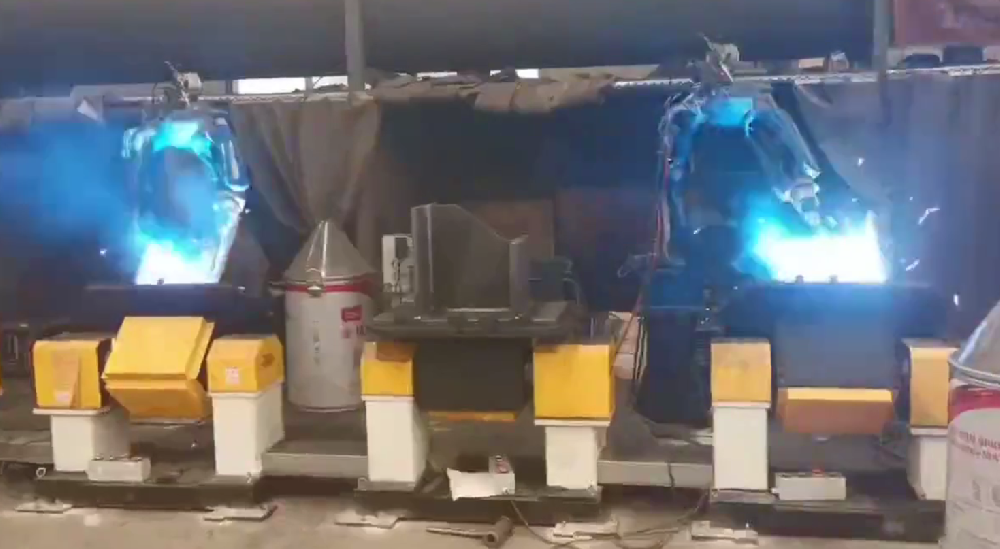
Factory space is often one of the biggest challenges manufacturers face when considering robotic welding automation. A company may have suitable welding applications and a clear need to improve productivity, but an existing workshop may already be filled with welding stations, machining equipment, material storage, and other production processes.

In these situations, manufacturers do not necessarily need a large automated welding line. A compact welding robot for limited factory space can provide a practical alternative by focusing on the welding tasks that are most suitable for automation.

The key is not simply to choose a smaller robot. It is to design an efficient robotic welding cell that combines the right robot, workpiece positioning, safety system, and material flow within the available production area.

LIGENT Robot provides industrial robot and welding automation solutions that can be configured according to different workpieces, welding processes, production requirements, and factory layouts.

Why a Smaller Welding Cell Can Be a Better Choice

Large automated production lines are often designed for high-volume manufacturing with dedicated production space. However, many manufacturers have different requirements.

They may operate in factories where:

  • Floor space is already occupied by existing equipment

  • Production layouts cannot be easily changed

  • Multiple products are manufactured in the same workshop

  • Welding operations are only part of the overall production process

  • Product dimensions or production volumes change frequently

For these manufacturers, a compact welding robot can make automation easier to introduce.

Instead of redesigning the entire factory, a company can create a dedicated robotic welding cell around one or several repetitive welding operations.

Start with the Welding Process, Not the Robot Size

When designing automation for a limited factory space, the first question should not be:

“What is the smallest robot available?”

The more important question is:

“What robot and workstation configuration can complete the welding task efficiently within the available space?”

A robot that is too small may not reach all welding positions. A larger robot may provide the required reach but create unnecessary space requirements.

Manufacturers should first evaluate:

  • Workpiece dimensions

  • Welding locations

  • Required welding process

  • Robot reach

  • Payload requirements

  • Workpiece loading method

  • Available floor space

This information provides a better foundation for selecting a suitable compact robotic welding system.

The Key Components of a Compact Welding Cell

A space-saving robotic welding cell may include several core components.

Industrial Welding Robot

The robot provides the required reach and flexibility for the welding application. A six-axis robot can access complex welding positions and support different workpiece orientations.

Welding Power Source

The welding equipment should be selected according to the production requirements and welding process.

Depending on the application, LIGENT robotic systems can be used for welding processes including MIG/MAG, TIG, ARC, and laser welding.

Workpiece Positioning

A positioner can be an important part of a compact welding cell.

By rotating or repositioning the workpiece, the positioner can help the robot access multiple welding areas without requiring the robot to move around a larger workstation.

Safety System

Safety equipment should be included in the overall layout from the beginning.

The design should consider the required protection while maintaining efficient operator access and material flow.

Loading and Unloading Area

A compact workstation still needs sufficient space for operators to load and remove workpieces safely and efficiently.

The material flow should be considered as part of the complete cell design.

How to Optimize a Limited Factory Layout

A compact welding cell is not only about reducing the physical size of the robot. The overall arrangement of the equipment is equally important.

Position the Robot Carefully

The robot installation position affects both the working range and the total cell footprint.

Placing the robot in an efficient position can reduce unnecessary movement and improve access to the workpiece.

Keep Material Flow Simple

Workpieces should move through the welding station with minimal unnecessary handling.

A good layout considers:

  • Where the workpiece enters the cell

  • Where it is loaded

  • How welding is performed

  • Where the finished part exits

Simple material flow can help improve productivity even in a small production area.

Use Workpiece Positioning Efficiently

A well-selected positioner can sometimes reduce the space required for the overall welding system.

Instead of designing a large cell that allows the robot to reach every angle, the workpiece can be repositioned to provide better access to the welding areas.

Avoid Unnecessary Automation Equipment

For a factory with limited space, every piece of equipment should provide a clear production benefit.

A compact welding automation system should focus on the equipment required to complete the application effectively.

When Is a Compact Welding Robot the Right Choice?

A compact robotic welding solution may be suitable for manufacturers that have:

  • Limited workshop space

  • Repetitive welding tasks

  • Small or medium-sized workpieces

  • Multiple product models

  • A need for flexible automation

  • An existing factory that cannot easily be expanded

Typical applications may include:

Metal Fabrication

Robotic welding can be used for repetitive frames, brackets, supports, and fabricated metal components.

Automotive Components

Compact robotic welding cells can help manufacturers automate suitable component welding processes while maintaining efficient use of production space.

Machinery Manufacturing

Manufacturers producing equipment frames and repeated structural components can consider robotic welding for suitable repetitive operations.

Customized Manufacturing

A flexible compact welding cell can be programmed for different workpieces when the production process and application are compatible with robotic automation.

Compact Welding Robot vs. Small Welding Robot

Although these terms are similar, the application focus can be different.

A small welding robot may focus on:

  • Small workpieces

  • Low-volume production

  • Small-batch manufacturing

A compact welding robot focuses more on:

  • Limited factory space

  • Small installation footprint

  • Efficient workstation layout

  • Space-saving automation

For LIGENT Robot's compact industrial robot range, the SR4-560, for example, has a 560 mm working radius and 4 kg payload, while other small six-axis models provide different reach and payload options. The appropriate robot should be selected according to the actual welding application rather than size alone.

LIGENT Robot for Flexible Welding Automation

LIGENT Robot provides welding robots, small six-axis robots, collaborative robots, positioners, linear rails, and other industrial automation equipment. The available robot and supporting equipment can be configured around different welding applications and production requirements.

For manufacturers with limited factory space, the solution can begin with a detailed evaluation of:

  • Workpiece dimensions

  • Welding process

  • Required production capacity

  • Available installation area

  • Workpiece positioning requirements

  • Existing workshop layout

This makes it possible to develop a robotic welding cell that focuses on practical production needs.

Make Better Use of Your Existing Factory Space

Limited floor space should not automatically prevent manufacturers from introducing robotic welding.

A compact welding robot for limited factory space can provide an effective way to automate repetitive welding tasks without requiring a large production line or immediate factory expansion.

With the right robot selection and an efficient workstation layout, manufacturers can improve welding consistency, increase productivity, and make better use of their existing production area.

LIGENT Robot provides flexible robotic welding solutions designed around different workpieces, production environments, and factory requirements.

Contact LIGENT Robot to discuss your welding application, available factory space, and production requirements to find a suitable compact welding automation solution.


It takes 20 minutes to complete the installation after unpacking and put into use in 1 hour

It takes 20 minutes to complete the installation after unpacking and put into use in 1 hour

LIGENT series robots, simple design, simple wiring; flexible deployment, time-saving and efficient

learn more